Mould on your bedroom ceiling. A dark patch creeping back along the window frame. You clean it off, it returns within weeks. Sound familiar? It's one of the most common complaints from renters and homeowners across Britain — and the frustrating part is that most people are treating the symptom, not the cause.
7 min readPublished: 5 May 2026Updated: Independently reviewed
1
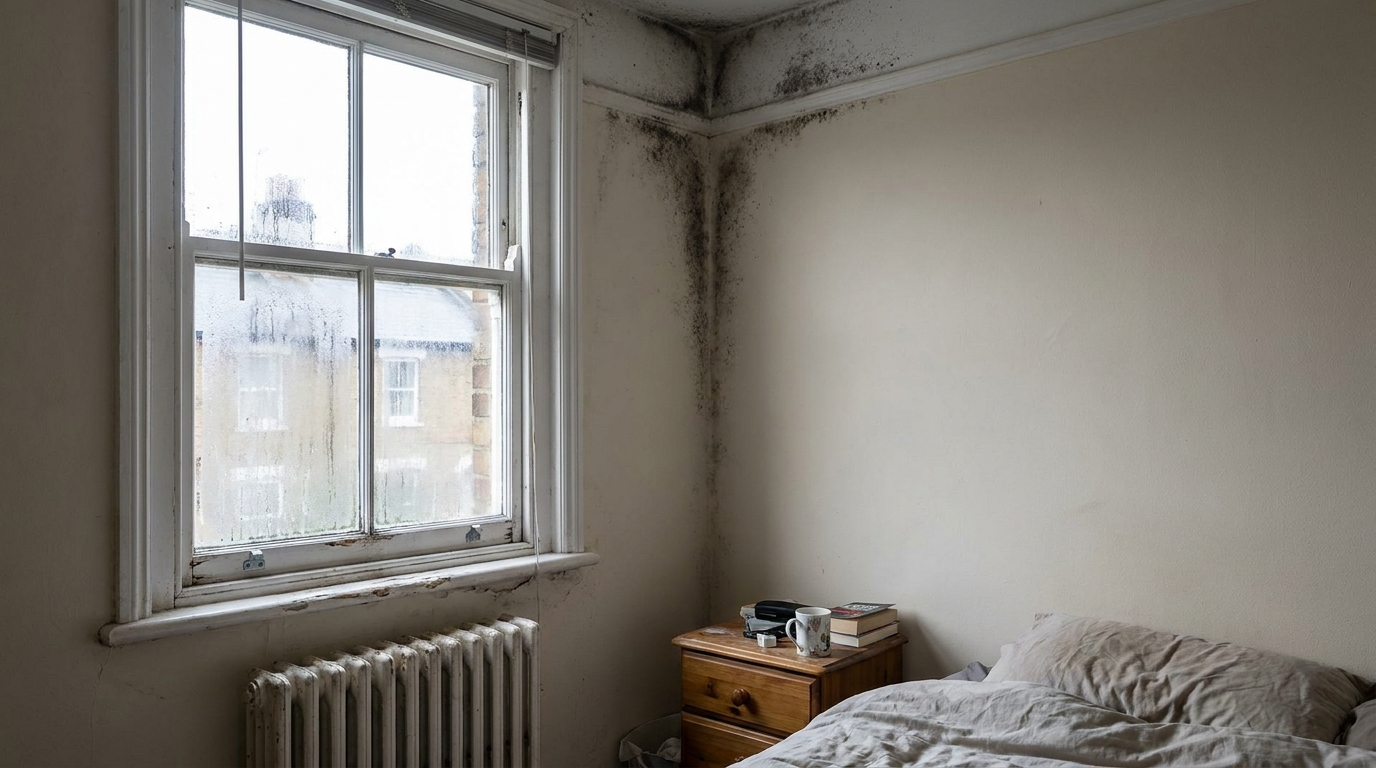
Hero Image — Bedroom with mould
bedroom-mould-corner-wall.jpg
Alt text: "Black mould growing in the corner of a bedroom wall near a window"
📷 Image Prompt (Midjourney / DALL-E / Ideogram)
A realistic photograph of a British bedroom showing black mould patches on the corner of a white wall near a window. Cold morning light. Condensation visible on the glass. The room looks like a typical rented flat — plain walls, radiator visible. Slightly unsettling but not dramatic. Editorial photography style, natural lighting, no people.
⚡ Quick Answer
Bedroom mould is caused by excess moisture in the air. The fastest way to stop it returning is to reduce humidity below 60% — a dehumidifier running overnight does this without any renovation or landlord involvement.
Here's the thing. Bleach, anti-mould paint, and vinegar sprays will remove visible mould temporarily. But none of them change the environment that allowed it to grow in the first place.
Mould needs three things to thrive: a surface, warmth, and moisture. You can't remove the walls. You can't make your home cold. But you can control the moisture — and that's where most people give up too easily.
The moment you stop treating the surface and start treating the air, everything changes.
✓ Takeaway: Surface treatments buy you time. Controlling humidity stops mould from coming back.
2
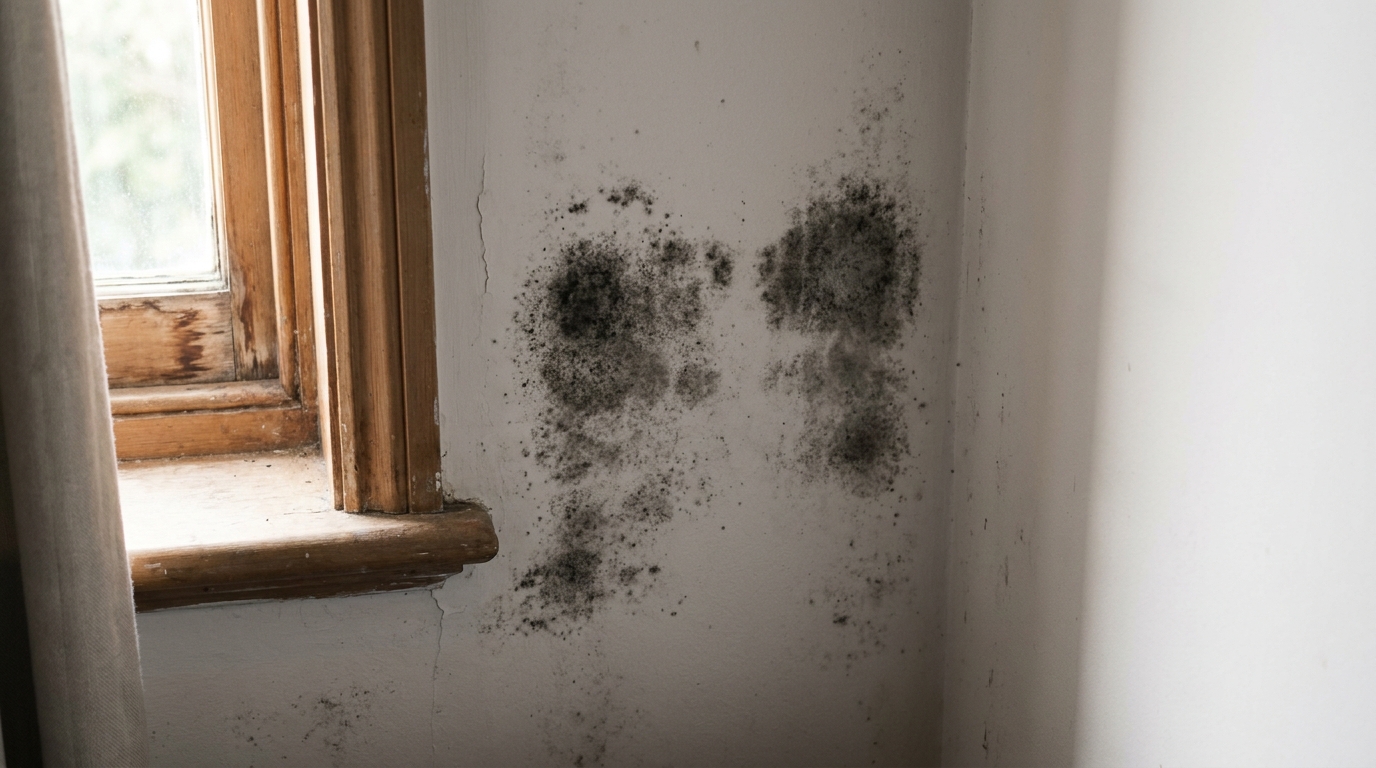
Close-up of mould on wall
black-mould-close-up-wall.jpg
Alt text: "Close-up of black mould spots on a bedroom wall near a window frame"
📷 Image Prompt (Midjourney / DALL-E / Ideogram)
A close-up photograph of black mould spots on a white painted wall near a window frame in a bedroom. The texture of the mould is clearly visible. Soft natural light from the side. Clean editorial style, no people, no text. Realistic, not graphic or alarming.
The Real Cause: What's Happening in Your Bedroom
Every night, a sleeping person releases roughly one litre of moisture into the air through breathing and perspiration. Add to that a poorly ventilated room, a cold external wall, and a window that stays shut in winter — and you've created near-perfect conditions for condensation to settle on surfaces.
When room humidity climbs above 60%, water starts to settle on the coolest surfaces: window frames, external walls, corners near the ceiling. That's where the black spots appear.
Worth knowing: the colder a surface, the more readily moisture clings to it. That north-facing wall or single-glazed window is almost always where you'll see it first. The target for a healthy bedroom is 40–55% relative humidity. Most affected rooms sit well above 65% for significant portions of the night.
✓ Takeaway: Measure your bedroom humidity with a cheap hygrometer. If it reads above 60%, that's your problem confirmed.
3
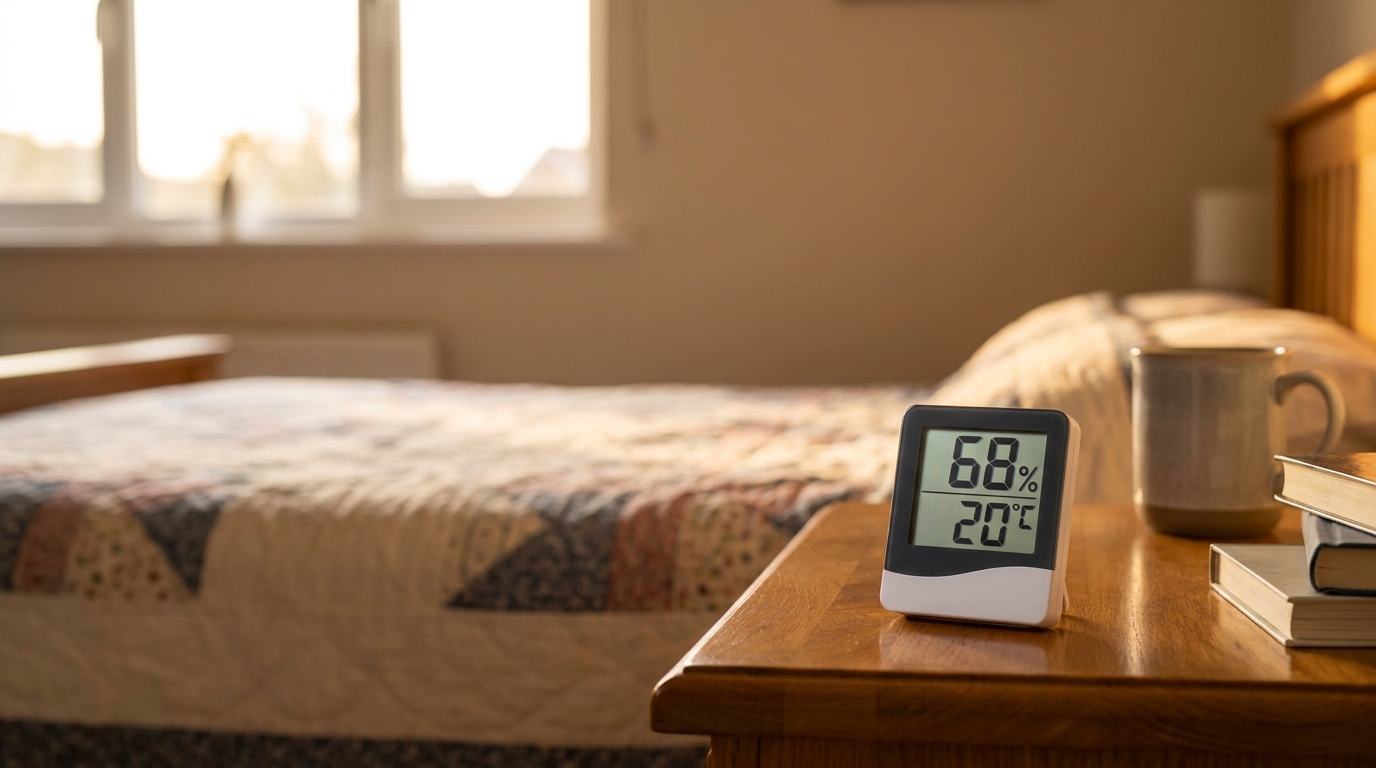
Hygrometer on bedside table
hygrometer-bedroom-high-humidity.jpg
Alt text: "Digital hygrometer on a bedside table showing 68% humidity in a bedroom"
📷 Image Prompt (Midjourney / DALL-E / Ideogram)
A digital hygrometer sitting on a bedside table in a British bedroom. The display reads 68% humidity. Soft evening light. The background shows a neatly made bed, plain walls. Clean product photography style with lifestyle context. No people, no text overlays.
How to Reduce Bedroom Humidity Without Spending a Fortune
A few habits make a real difference before you spend anything:
Keep the bedroom door slightly open when sleeping. It allows moisture to escape rather than building up in one room.
Dry clothes elsewhere. A single load of laundry releases up to 2 litres of moisture as it dries. Never in the bedroom.
Ventilate briefly each morning. Open the window for 10 minutes after waking — it flushes out the condensation that built up overnight.
These steps help. But in a cold British winter, with a poorly insulated room, they're rarely enough on their own. That's where a dehumidifier comes in — not as an expensive last resort, but as a practical overnight tool that does the heavy lifting while you sleep.
✓ Takeaway: Habits reduce moisture. A dehumidifier controls it precisely and consistently.
4
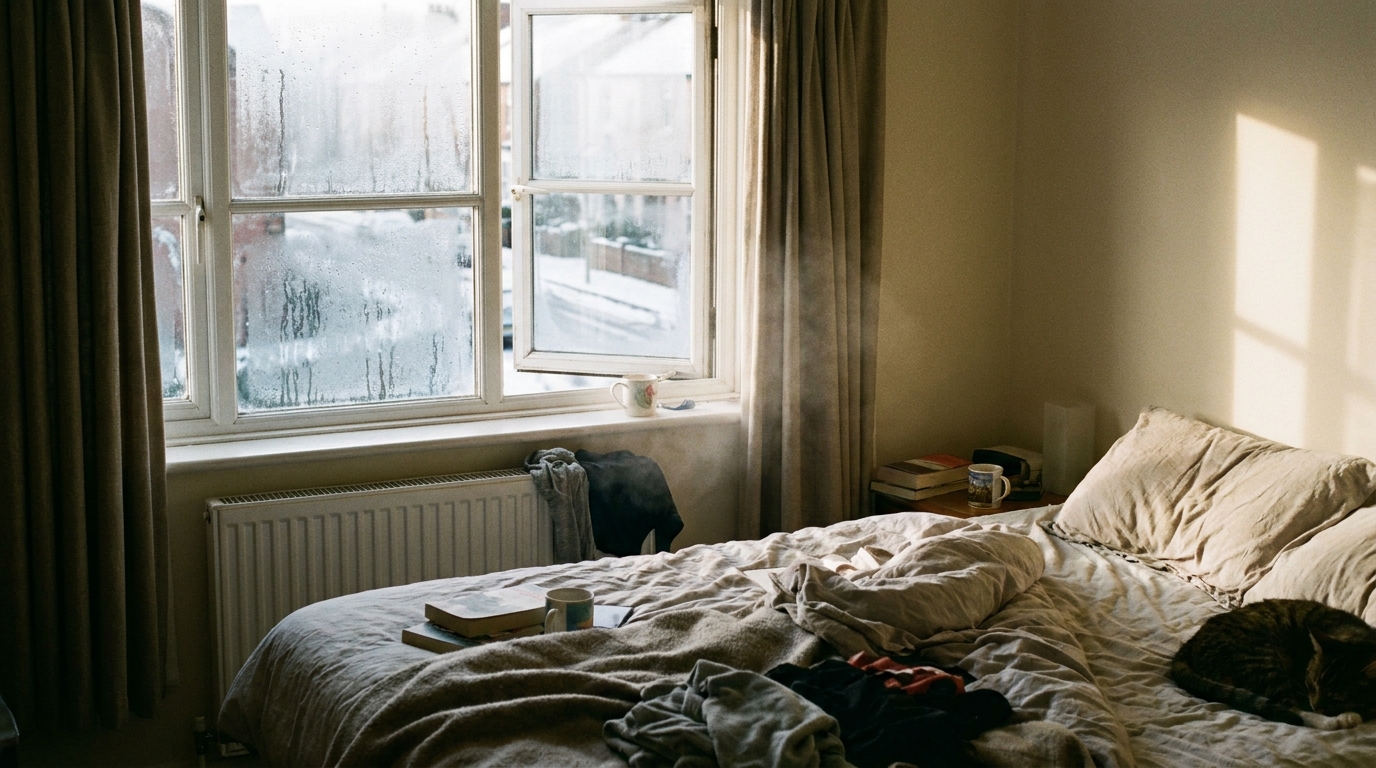
Bedroom window open for ventilation
bedroom-window-ventilation-morning.jpg
Alt text: "Bedroom window slightly open in the morning to ventilate and reduce condensation"
📷 Image Prompt (Midjourney / DALL-E / Ideogram)
A British bedroom on a winter morning. The window is slightly open, letting in a small amount of fresh cold air. Condensation droplets visible on the glass. Morning light, unmade bed in background. Cosy but practical atmosphere. Realistic photography style, no people.
The Right Machine for Overnight Bedroom Use
Not all dehumidifiers are suited to a bedroom. Some are too loud. Some have bright displays that disturb sleep. Some lack a timer, so you'd have to get up to switch them off.
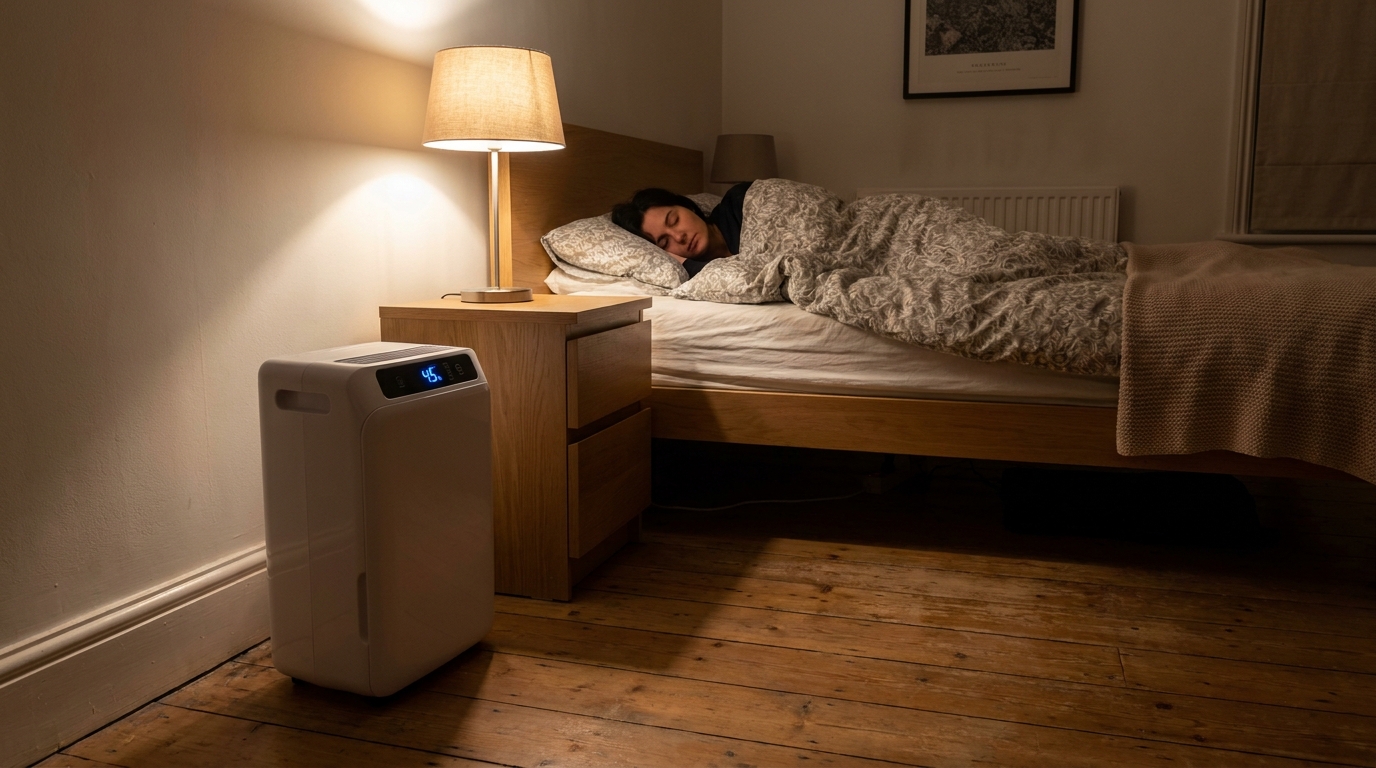
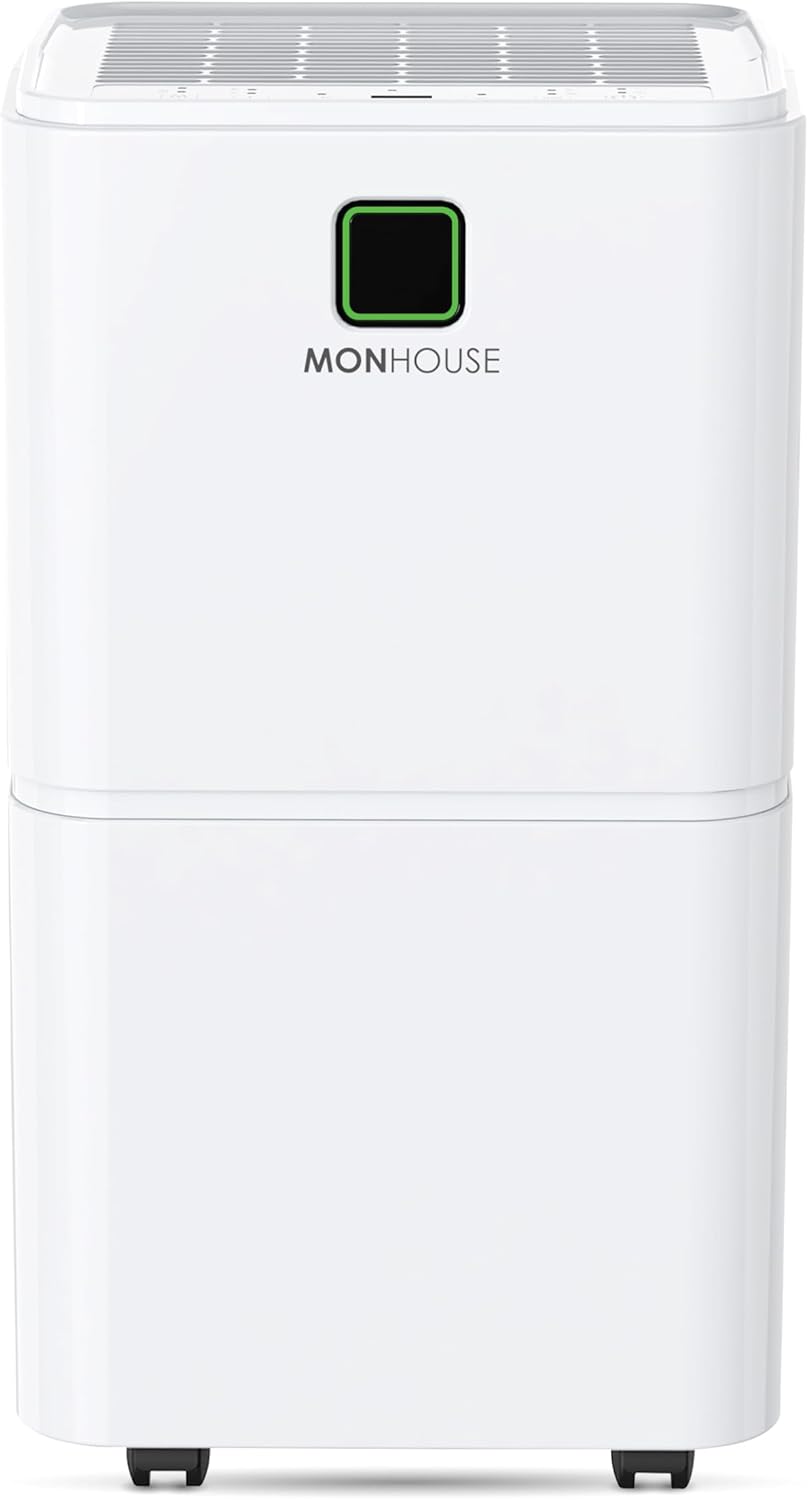
The MONHOUSE 12L/Day Digital is one of the few machines genuinely designed for overnight use. It removes up to 12 litres of moisture per day, has a dedicated Sleep Mode that reduces noise to near-silence and dims the display, and a 24-hour timer so you can set it before bed and let it run exactly as long as needed.
Over 730 buyers have reviewed it with a 4.6-star rating — and the most common praise is specifically about how quietly it runs at night.
5
Dehumidifier running at night in bedroom
dehumidifier-bedroom-night-use.jpg
Alt text: "A dehumidifier running quietly in a bedroom corner while someone sleeps"
📷 Image Prompt (Midjourney / DALL-E / Ideogram)
A white compact dehumidifier sitting quietly on the floor in the corner of a tidy British bedroom at night. Soft bedside lamp light. The unit has a small glowing display. The bed is visible in the background with someone sleeping under the covers. Calm, peaceful atmosphere. Realistic lifestyle photography, no product branding visible.
Our Top Pick for Bedrooms
MONHOUSE 12L/Day Digital Dehumidifier
★★★★★4.6731 reviews
Quiet overnight operation with Sleep Mode, auto shut-off timer, and a 12L/day extraction rate — built for exactly this problem.
If allergies are also a factor, the Devola DV12L adds a dust filter and runs at Energy Class A, keeping electricity costs low throughout the night.
✓ Takeaway: For bedrooms, prioritise low noise and a timer. The MONHOUSE ticks both boxes without a high price tag.
What to Do With the Mould That's Already There
Once you've started controlling the humidity, deal with the existing patches properly.
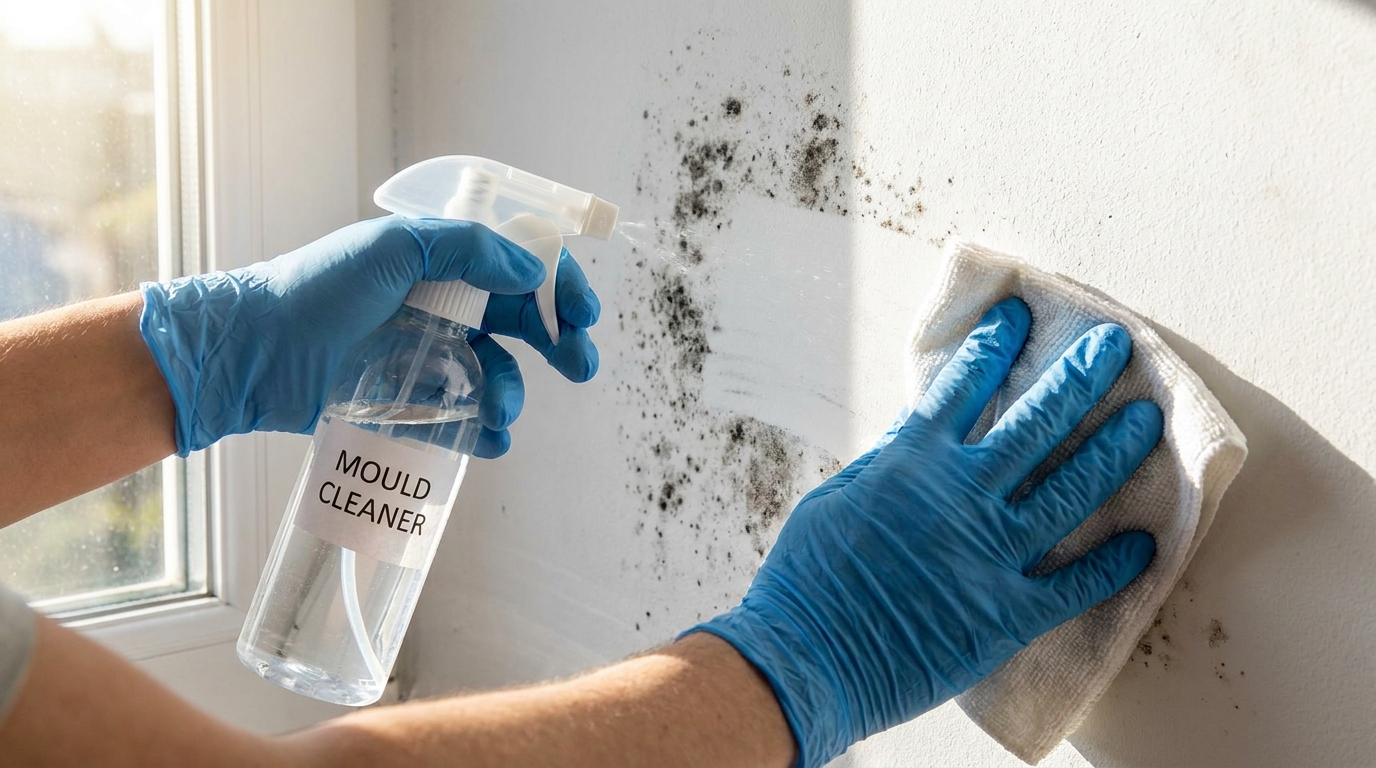
Mix one part white vinegar with one part water, apply to the affected area, and leave for an hour before wiping. For more stubborn patches, a dedicated mould remover spray works well — available at most supermarkets for under £5.
After cleaning, apply a mould-resistant primer before repainting. It creates a surface that's less hospitable to regrowth. Combined with lower humidity going forward, most people find they don't see it return.
Don't bother with anti-mould paint alone. It slows regrowth slightly but won't stop it if the conditions haven't changed.
✓ Takeaway: Clean with vinegar or a spray, prime before repainting, then keep humidity below 60% consistently.
6
Cleaning mould from wall
cleaning-mould-bedroom-wall.jpg
Alt text: "Gloved hands cleaning black mould from a bedroom wall with a spray bottle"
📷 Image Prompt (Midjourney / DALL-E / Ideogram)
A person's gloved hands cleaning black mould from a white wall with a spray bottle and cloth. Bright bedroom setting. Close-up shot focused on the action. Clean, informative editorial photography style. No face visible, just hands and the wall.
The Short Version
Bedroom mould is a moisture problem, not a cleaning problem. Drop the room's humidity below 60%, dry clothes elsewhere, ventilate briefly each morning — and run a quiet dehumidifier overnight if the problem persists.
Most people see a genuine difference within two to three weeks. If condensation on your windows is also an issue — which it often is when mould is present — our guide on how to stop condensation on windows covers that in detail. The two problems share the same root cause and the same fix.
Why does mould keep coming back after I clean it?
+
Because cleaning removes the visible mould but doesn't change the conditions that allow it to grow. Mould needs moisture above 70% relative humidity at the surface to establish itself. If your bedroom air regularly exceeds 60–65% humidity overnight, any surface that gets cold enough will grow mould within weeks of being cleaned. The only lasting fix is lowering the humidity — not cleaning more thoroughly.
Is black mould in a bedroom dangerous?
+
Most household black mould — the dark patches that appear on walls and window frames — is Cladosporium or Aspergillus, not the toxic Stachybotrys variety often reported in the press. That said, all mould produces spores that worsen respiratory conditions, trigger allergies and can cause persistent coughs and eye irritation, particularly in children, the elderly and anyone with asthma. The NHS advises dealing with mould promptly and improving ventilation. Small patches can be cleaned yourself; large areas of mould covering more than one square metre should be assessed by a professional.
Can a landlord make me responsible for bedroom mould?
+
This is a grey area, but the law has shifted significantly in renters' favour since the Awaab's Law amendment to the Renters Reform Bill. Landlords are now required to address mould and damp within defined timeframes. A landlord can only argue tenant responsibility if they can demonstrate the mould was caused directly by the tenant's behaviour — for example, using a tumble dryer without ventilation in a well-ventilated property. Condensation mould in a poorly insulated or poorly ventilated home is almost always the landlord's responsibility to address structurally. Documenting the problem with photos and written communication protects your position.
How long does it take for a dehumidifier to stop bedroom mould?
+
A dehumidifier won't remove existing mould — you'll need to clean that manually first. What it does is change the environment so mould can't return. Most people running a dehumidifier overnight notice the room feeling drier and less musty within a week. After two to three weeks of consistent use below 55% humidity, mould regrowth should stop entirely. The key is running it overnight, not just during the day — that's when humidity peaks and conditions are worst.
What's the best way to clean black mould off a bedroom wall?
+
For small patches, a solution of one part white vinegar to one part water applied with a cloth and left for an hour before wiping works well. Vinegar kills most mould species without the harshness of bleach. For stubborn or larger patches, a dedicated mould remover spray from a supermarket is more effective. Always wear rubber gloves and a dust mask when cleaning mould — the disturbed spores can irritate your lungs. After cleaning, apply a mould-resistant primer before repainting, and address the humidity to stop it returning.
Does mould in a bedroom affect sleep quality?
+
Yes, in several ways. Mould spores released overnight can irritate airways and trigger nasal congestion, coughing and disrupted breathing — particularly in light sleepers and anyone with respiratory conditions. High humidity itself also affects sleep quality independently of the mould: humid air feels heavier and warmer, making it harder to reach the deep sleep stages. Reducing bedroom humidity to 45–55% improves both the mould problem and sleep conditions simultaneously — it's one of the few home improvements that has an immediate quality-of-life impact.
Affiliate Disclosure: Damp Solver UK participates in the Amazon Associates Programme. When you click a product link and make a purchase, we may earn a small commission at no additional cost to you. This never influences our editorial independence or recommendations.