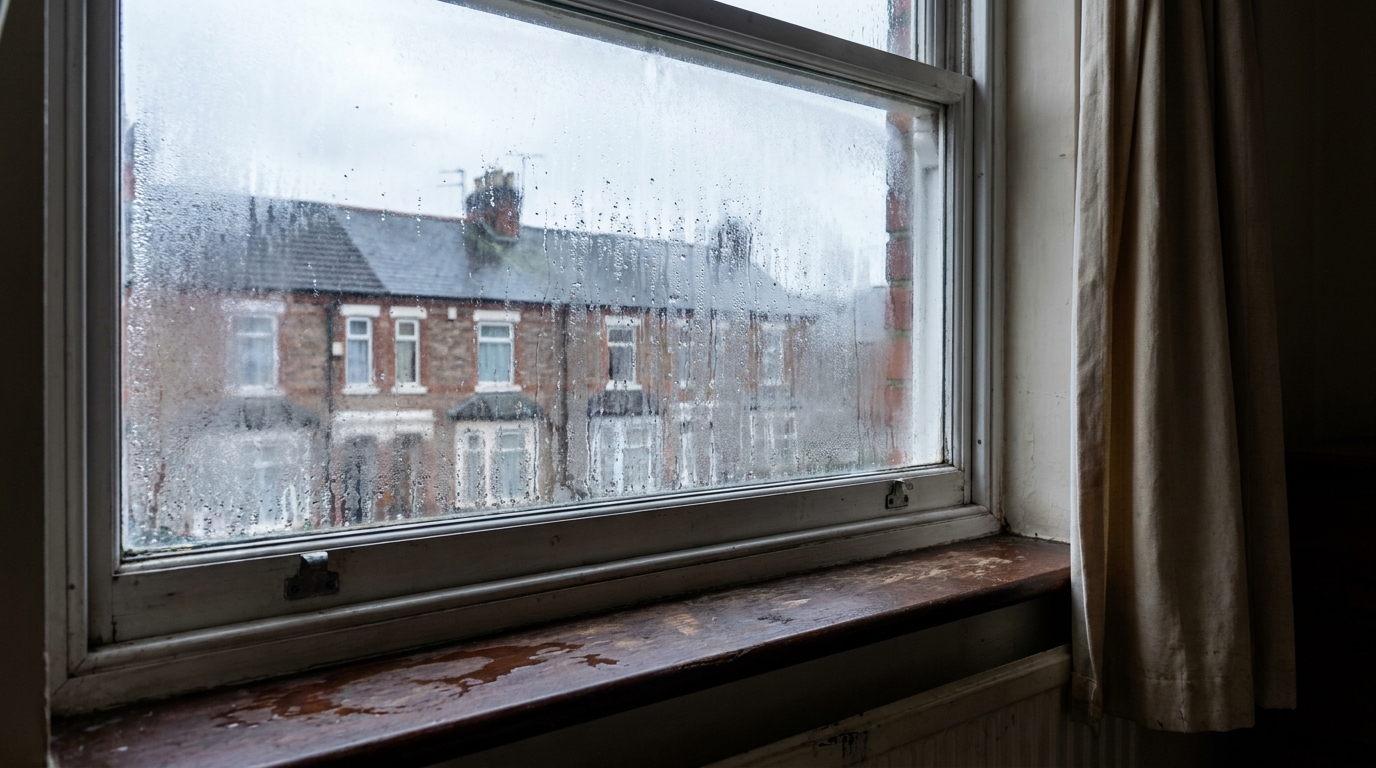
Condensation forms when warm, moist indoor air hits cold glass. The only lasting fix is reducing indoor humidity below 55%. A dehumidifier running overnight does this automatically — most people notice clear windows within 2–3 days. No renovation, no landlord permission needed.
What Causes Condensation on Windows?
Condensation forms when warm, moist indoor air meets a cold surface. Glass is almost always the first place it appears because it loses heat faster than walls or ceilings — especially single-glazed windows, which offer almost no insulation at all.
Here's the chain of events that happens in most British homes overnight: the heating goes off, the room cools down, glass drops to near-outdoor temperature, and the moist air you've been generating all day — through breathing, cooking, showering, even drying a towel — settles on the coldest surface it can find. That's your window.
The key measurement is relative humidity. When it climbs above 60–65%, condensation becomes almost inevitable on cold glass. Most affected bedrooms sit well above this for most of the night without the homeowner knowing.
The main culprits
- Breathing overnight — a sleeping person releases around one litre of moisture every 8 hours
- Drying clothes indoors — a standard load releases up to 2 litres into the air
- Cooking without extraction — steam travels through the whole home when internal doors are open
- Hot showers with poor ventilation — bathroom moisture spreads quickly
- Keeping windows permanently shut — moisture has nowhere to escape
How to Stop Condensation on the Inside of Windows
Condensation on the inside of windows is the most common type — and the one this guide addresses. It's caused entirely by indoor humidity and is fully within your control without any structural work.
The approach that consistently works has three parts: reduce how much moisture enters the air, increase how much escapes, and lower the overall humidity with a dehumidifier if the first two aren't enough.
Step 1 — Ventilate briefly each morning
Open the bedroom window for 10 minutes when you wake up. This one habit makes a measurable difference. The moisture that built up overnight gets flushed out before it has chance to settle permanently on frames and sills. It feels counterintuitive in winter but the heat lost is minimal — and the alternative is mould.
Step 2 — Stop drying clothes in affected rooms
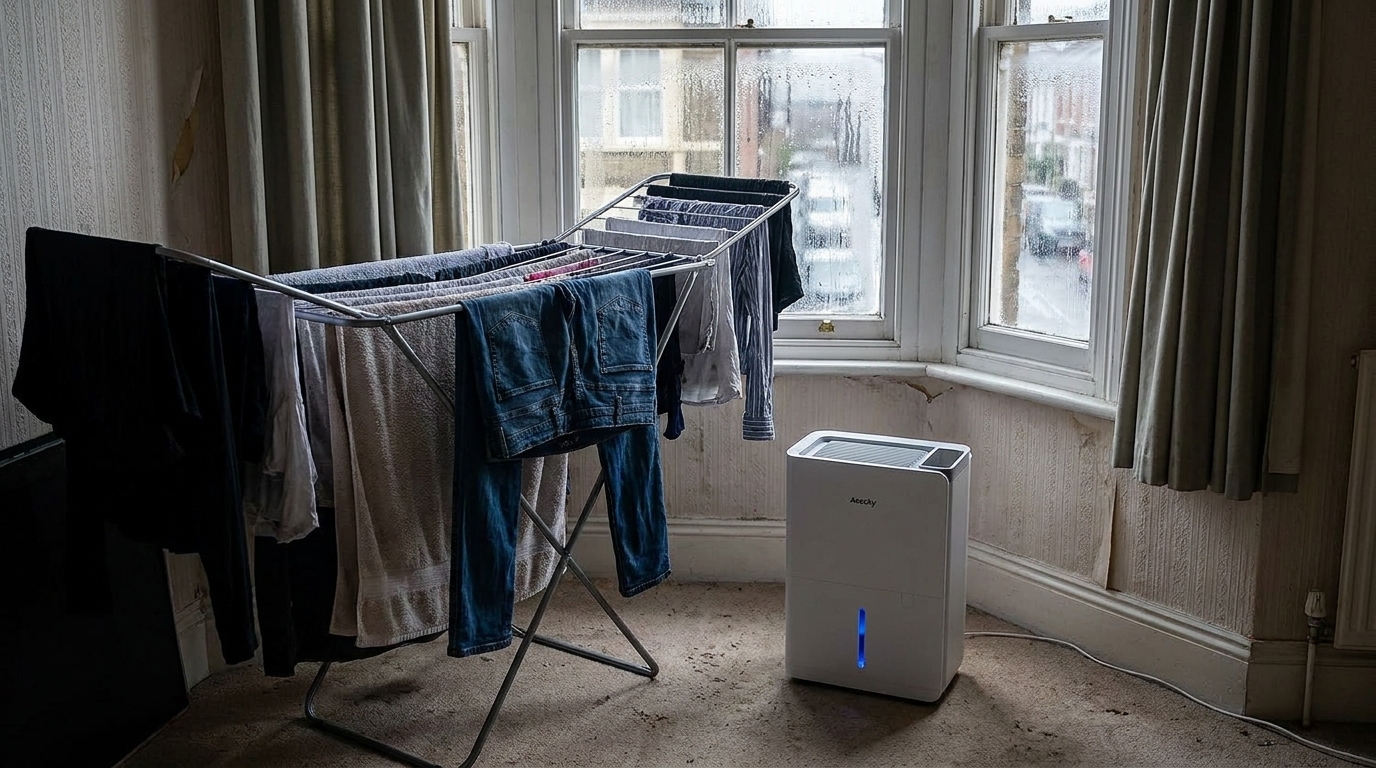
A single load of wet laundry releases up to 2 litres of water vapour into the air as it dries. If your bedroom or living room doubles as a drying space, this is almost certainly the biggest single contributor to your condensation problem. Move the airer to a utility space or use a tumble dryer. If drying indoors is unavoidable, run a dehumidifier next to the airer — it captures the moisture before it can reach the walls and windows.
Step 3 — Use extractor fans properly
Bathroom and kitchen extractors should run during and for at least 15 minutes after cooking or showering. Many people switch them off too soon, leaving the bulk of the moisture still in the air. Keep internal doors closed while cooking — this stops steam migrating to cooler rooms where it condenses.
How to Stop Condensation on Windows Overnight
Overnight is when condensation is at its worst, because heating is off, temperatures drop, and moisture from the whole day is still in the air. This is exactly when a dehumidifier earns its place.
Running a dehumidifier in the affected room from around 10pm removes excess moisture before it ever reaches the glass. Set it to maintain 50% relative humidity and it will cycle on and off automatically throughout the night. Most people notice the difference within two to three evenings.
A cheap hygrometer — under £10 on Amazon — tells you the exact humidity in the room. Anything above 60% means conditions are ripe for condensation. Below 55% and the glass stays dry even on the coldest nights.
Worth knowing: leaving a small gap in the window overnight also helps significantly, even in winter. The temperature drop in the room is slight, but the moisture escaping is substantial. Combine this with a dehumidifier and overnight condensation almost always disappears entirely.
Five Habits Making Your Condensation Worse
Most condensation problems aren't caused by one thing — they're caused by several small habits compounding. These are the most common ones:
- Drying clothes in the bedroom or living room. Up to 2 litres of moisture per load. If this is a daily habit, it will overwhelm any other fix you try.
- Keeping internal doors open while cooking or showering. Steam travels fast. A closed kitchen or bathroom door contains moisture where it can be extracted.
- Turning the heating completely off overnight. A cold room with moist air and cold windows is the perfect condensation recipe. Even a background temperature of 15°C helps significantly.
- Thick curtains closed against the glass. Curtains trap cold air against the window and prevent any air circulation around the pane. Pull them slightly clear of the glass or use a rail that allows air behind.
- Ignoring extractor fans. Bathroom and kitchen extractors should run for 15–20 minutes after use, not just during. Most moisture is released in the minutes after you finish cooking or showering.
The Most Effective Long-Term Fix
Habits reduce moisture. A dehumidifier controls it precisely, automatically and consistently — even when life gets in the way of the perfect routine.
For condensation specifically, look for a compressor model with a humidistat. This means the machine measures humidity continuously and only runs when needed — it won't keep extracting once the air is at your target level. Running costs work out at roughly 4–8p per hour for most modern units. Over a full winter night that's 32–64p — considerably less than the cost of replacing a rotting window frame.
Capacity guide: a 12L/day unit handles one or two rooms. For a whole flat with condensation across multiple windows, a 20–25L unit clears the air faster and more efficiently.
Here's the science — kept simple. Warm air holds moisture. Cold air can't hold as much. When warm, moist indoor air touches a cold surface like a window pane, it releases that moisture as water droplets. That's condensation.
Windows are almost always the first place you notice it because glass conducts cold far better than walls or ceilings. Single-glazed windows are the worst offenders. But even double-glazed units show condensation when indoor humidity is high enough.
The process happens overnight because that's when temperatures drop, heating goes off, and a sleeping person releases roughly one litre of moisture into the air through breathing alone. Worth knowing: if you're seeing it every morning without fail, your indoor humidity is almost certainly sitting above 65% for long periods. The healthy range is 40–55%.
Is Condensation Actually a Problem — or Just Annoying?
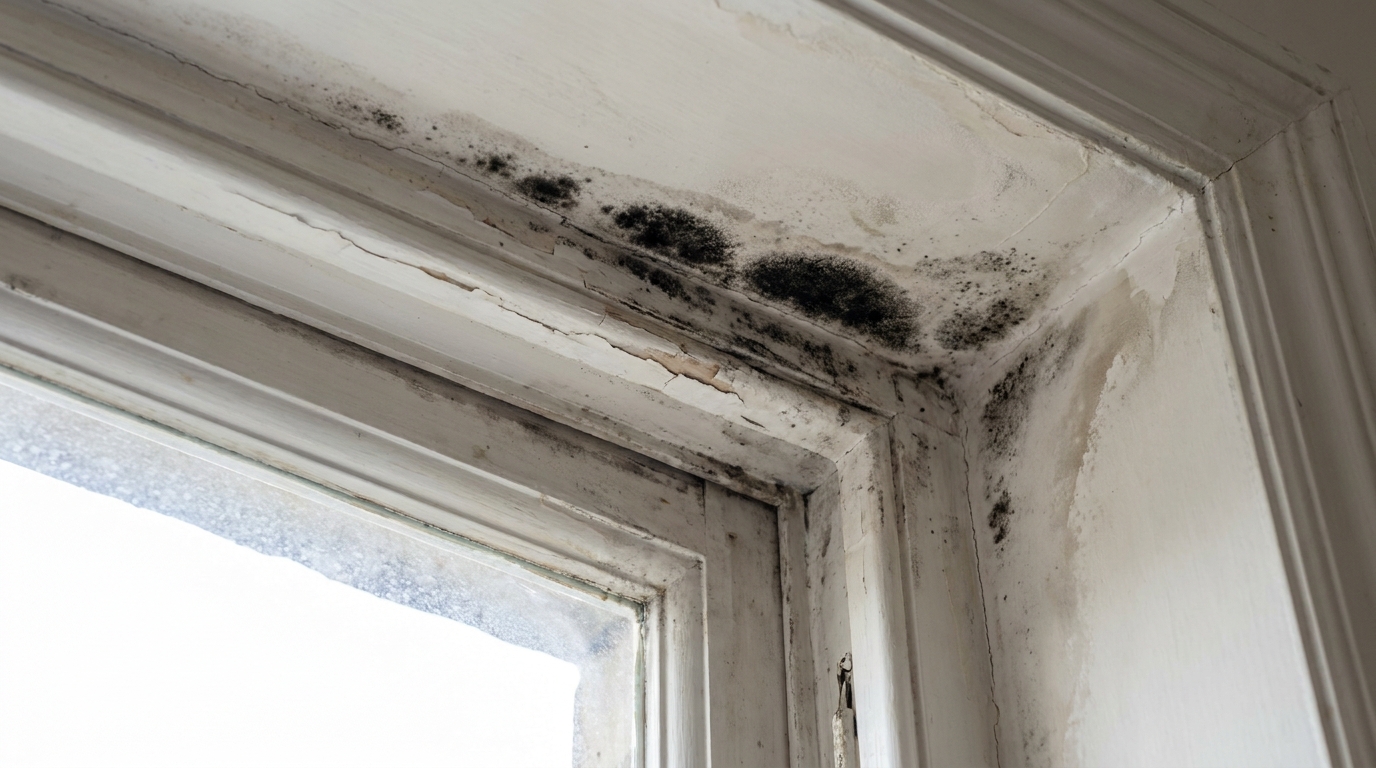
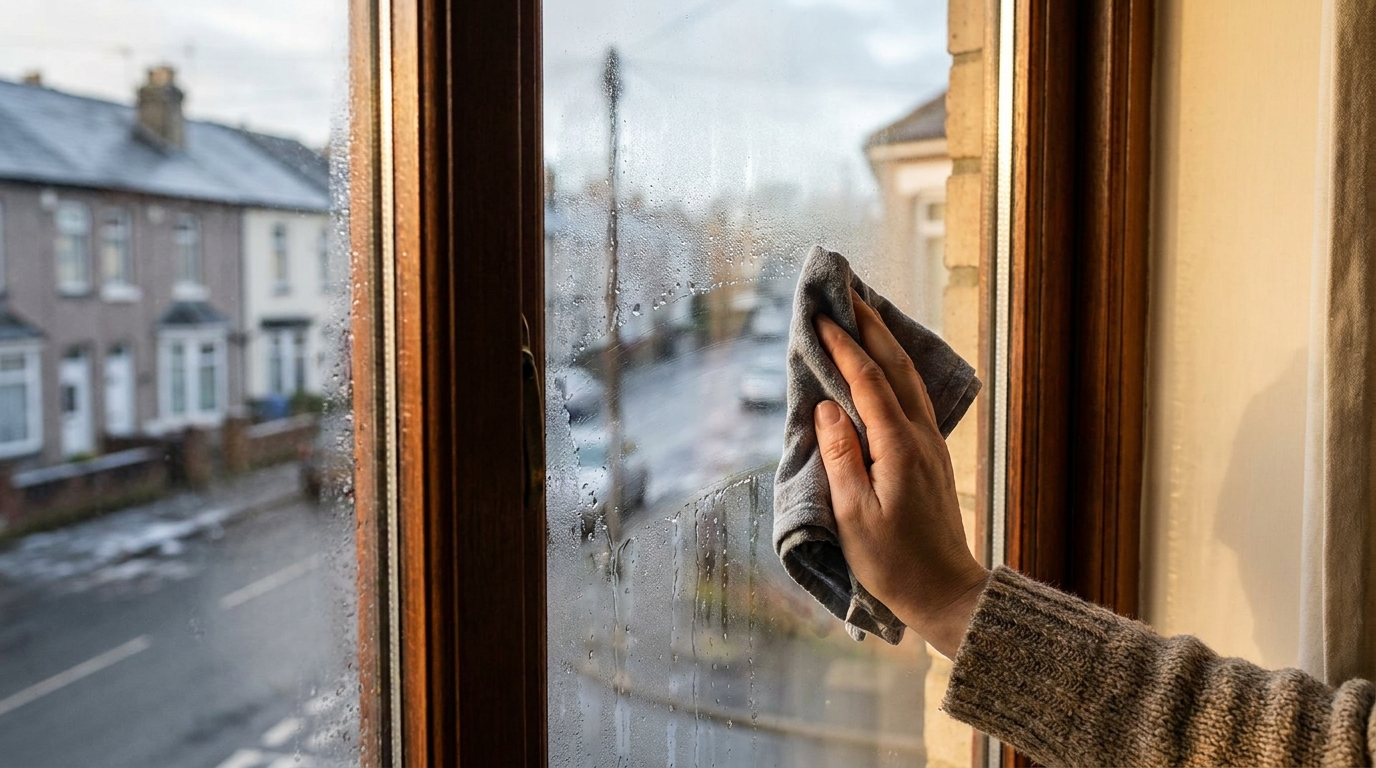
Both. Left untreated, persistent condensation causes real damage. The water that runs down your windows soaks into wooden frames, causing rot over time. It pools on sills and creates the damp conditions that black mould needs — particularly in the corners of window frames, which are cold and sheltered.
Mould on window frames is almost always caused by condensation, not rising damp or penetrating damp. For renters, this matters even more. Landlords frequently attempt to blame mould and condensation damage on tenant behaviour. Understanding the cause — and fixing it — protects your deposit.
The good news: condensation is one of the easier home problems to solve. Unlike rising damp or structural leaks, it doesn't require any work to the building itself.
Five Things That Make It Worse
Most condensation problems aren't caused by one thing — they're caused by several small habits that add up. These are the most common culprits:
- Drying clothes indoors. A single load releases up to 2 litres of moisture into the air. If you dry laundry in the bedroom or living room, you're creating the conditions for condensation every single time.
- Keeping windows permanently shut. No ventilation means moisture has nowhere to go. Even opening a window slightly for 10 minutes each morning makes a measurable difference.
- Turning the heating off completely overnight. A cold room with moist air and cold windows is the perfect condensation recipe. A low background temperature — even 15°C — helps significantly.
- Cooking without ventilation. Boiling water produces steam that travels through the whole home if doors are left open.
- Too many people, too small a space. Each person in a room adds moisture continuously. In a small flat, this builds up quickly.
None of these require major changes. Small adjustments to daily habits reduce condensation noticeably within a week.
The Most Effective Long-Term Solution
Changing habits helps. But in a British winter — with cold walls, limited ventilation and heating costs that make you reluctant to open windows — habits alone rarely eliminate condensation completely. That's where a dehumidifier becomes the practical solution.
A dehumidifier doesn't just collect water. It actively maintains the air at a stable humidity level, preventing moisture from ever building up to the point where it settles on cold surfaces. Run one overnight — when condensation forms — and you'll notice windows significantly drier within two to three days.
For condensation specifically, capacity matters. A 12L/day unit handles one or two rooms comfortably. For a whole flat or house with persistent problems across multiple rooms, a higher-capacity machine works faster and more efficiently.
The AEOCKY Max 25L/Day is the most reviewed dehumidifier for this specific problem on Amazon. With over 5,000 verified buyer reviews and a 4.6-star rating, it covers up to 50m² and operates down to 10°C — meaning it keeps working in cold hallways and unheated rooms where cheaper machines give up.
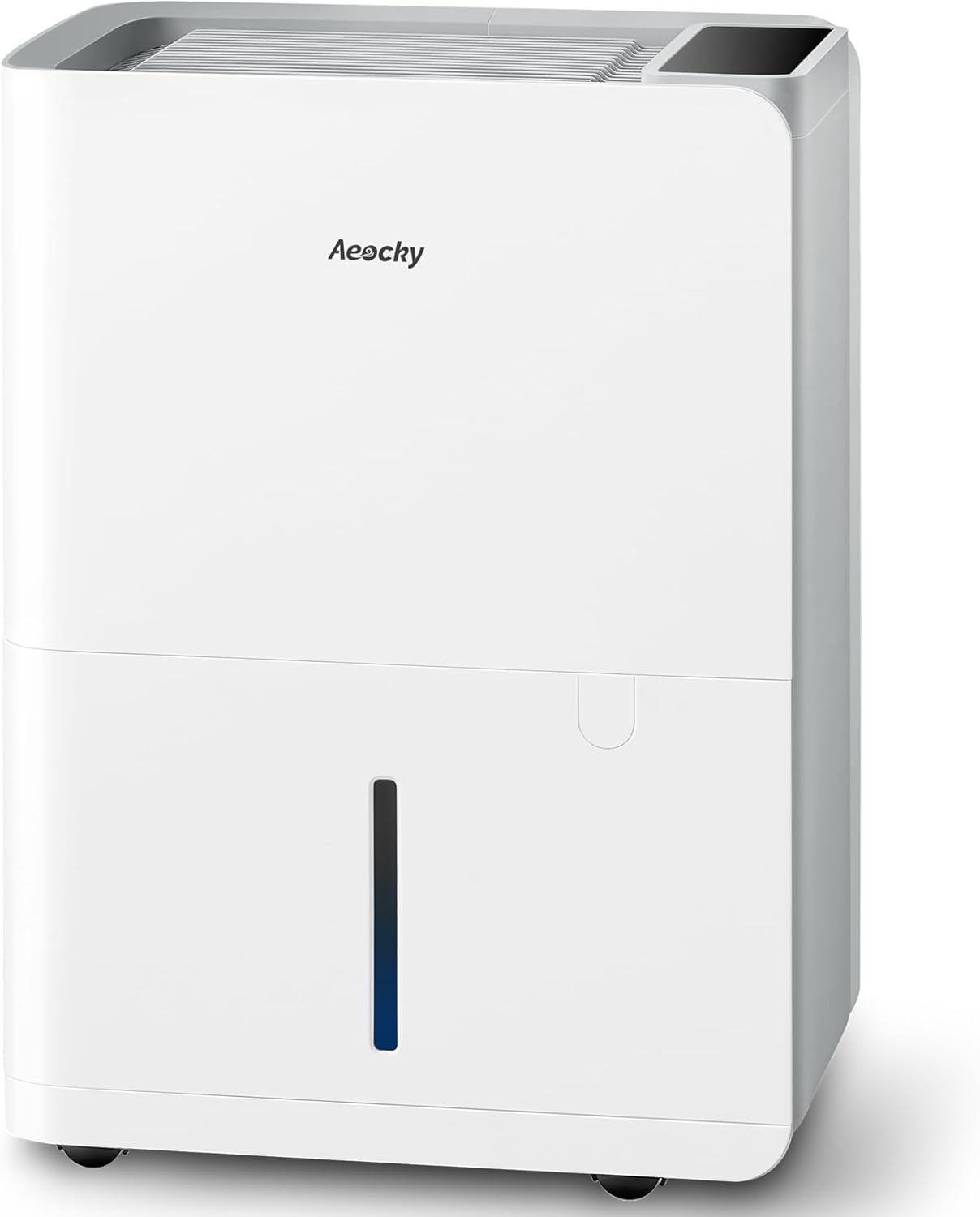
Covers up to 50m², works down to 10°C, and maintains target humidity automatically — the most trusted choice for persistent condensation in British homes.
View on AmazonFor a single bedroom, the more compact Compressor Dehumidifier handles the job just as effectively at a lower price point.
Does Double Glazing Actually Stop Condensation?
Double glazing reduces condensation by keeping the inner pane warmer — which means the temperature difference between the glass and the indoor air is smaller, so less moisture settles. It's a genuine improvement over single glazing.
That said, it doesn't eliminate condensation. If indoor humidity is high enough, moisture will still settle on double-glazed windows — particularly on cold north-facing walls or in rooms where a lot of moisture is generated. The glass is warmer, but if humidity is at 70%, condensation will still form.
Condensation between the panes — a different problem
If you see condensation between the two panes of a double-glazed window, that's a failed seal — a separate issue entirely. The sealed unit needs replacing; a dehumidifier won't fix it. This is a job for a glazier, not a home remedy.
Secondary glazing and window film
Secondary glazing — an additional layer fitted to existing windows — raises the inner surface temperature further and can significantly reduce condensation. Professional installation starts at around £100–£200 per window. For renters, it typically requires landlord permission.
Window insulation film (the kind you apply with a hairdryer) is a cheaper DIY option and does help, though the improvement is more modest. Worth trying on a single window first to see if it makes a difference before covering the whole home.
The Short Version
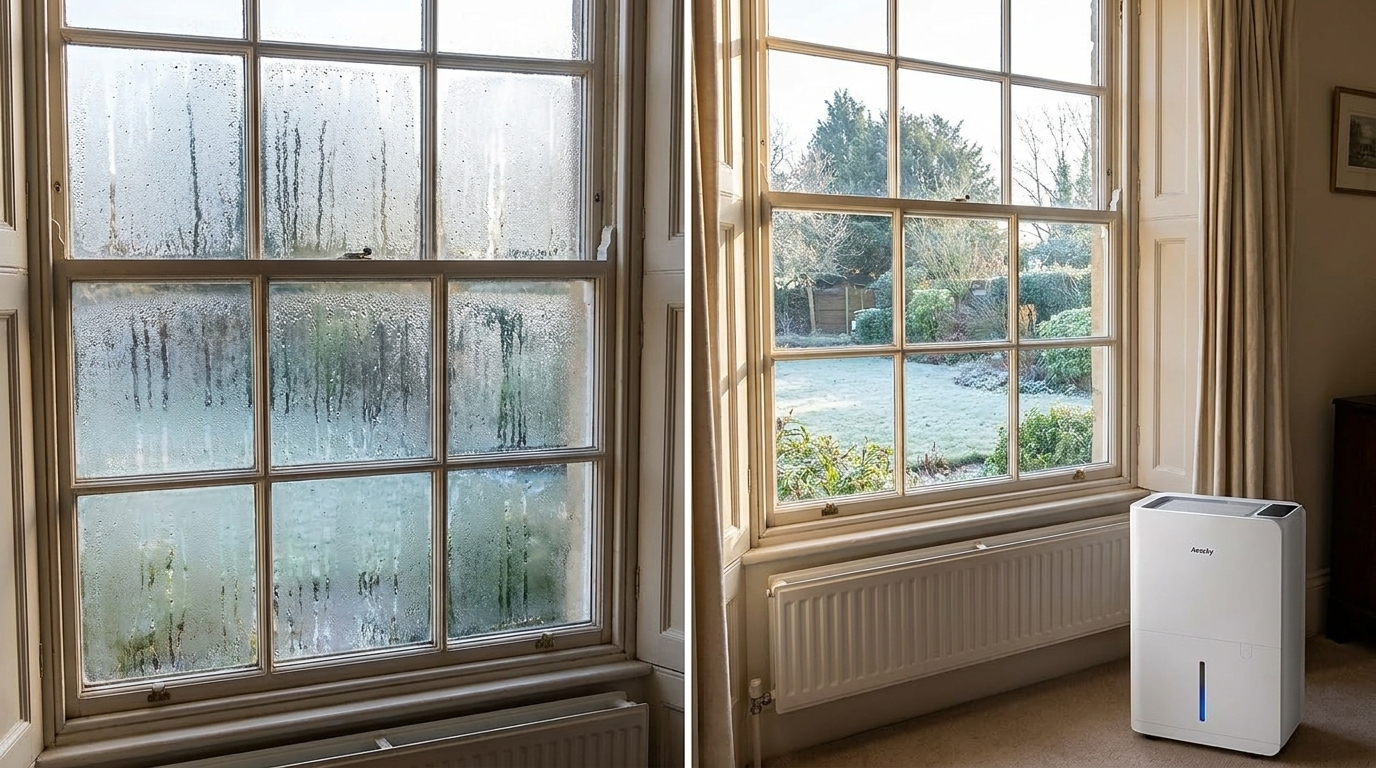
Condensation on windows is a moisture problem, not a structural one. Reduce indoor humidity below 55%, ventilate briefly each morning, stop drying clothes in living areas — and run a dehumidifier overnight if the problem persists.
Most people who follow this approach see clear windows within a week. If mould has already taken hold around the frames, read our guide on how to stop mould growing in a bedroom — the two problems often come together and fixing one helps fix the other.
For a full comparison of machines best suited for condensation, see the Top 10 dehumidifier guide. More damp advice at Guides & Advice.