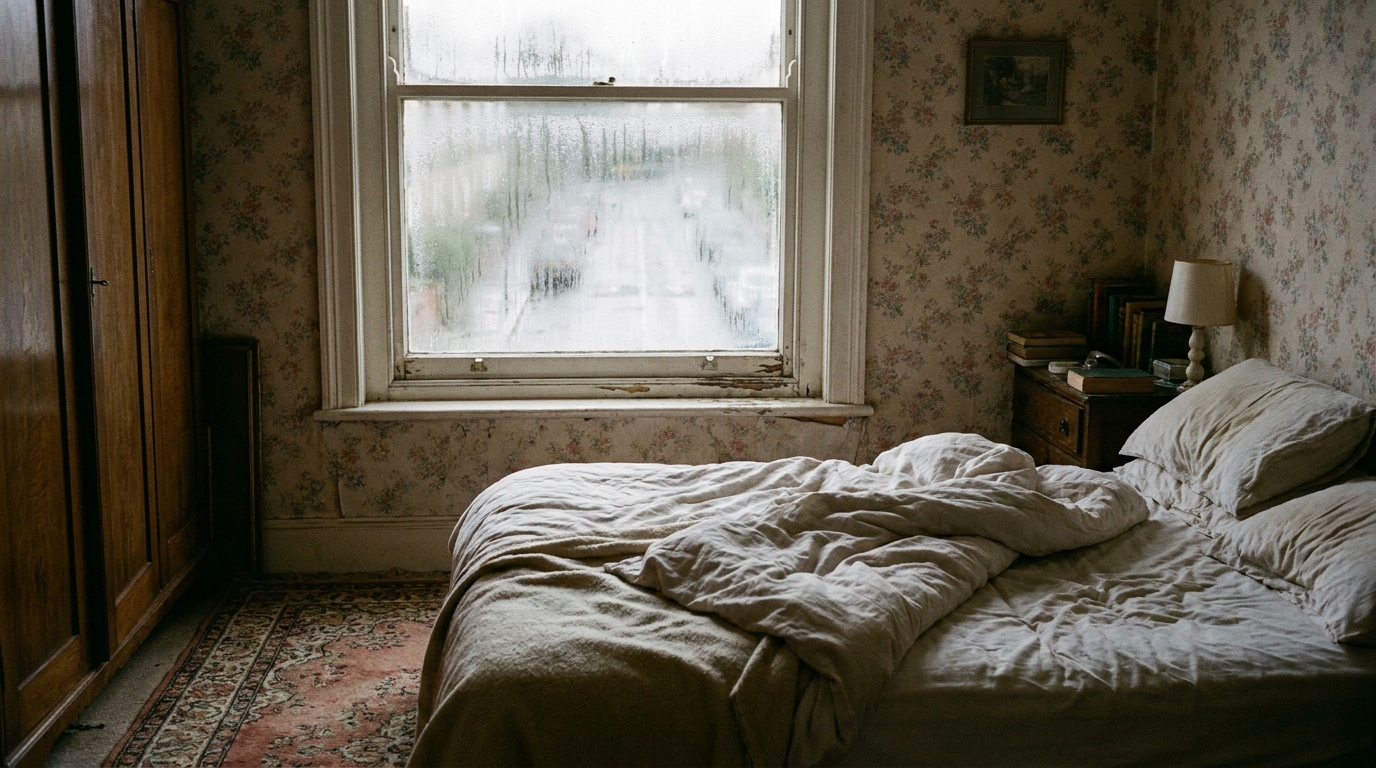
A bedroom that smells damp is almost always caused by excess moisture — from breathing, sweating, and poor ventilation overnight. That musty odour is produced by mould spores or bacteria feeding on humidity that settles on cold surfaces. Cleaning removes visible mould but doesn't fix the conditions. The real solution is reducing airborne moisture: ventilate in the morning, check behind furniture, and run a dehumidifier overnight.
What Causes a Bedroom to Smell Damp?
Every night, a single sleeping person releases around a litre of moisture into the air — through breathing and perspiration. Two people sharing a room push that figure closer to two litres. Add a damp towel on the floor, wet hair resting on a pillow, or a radiator with clothes draped over it, and you've got a room that's working hard to hold onto humidity it has no way to expel.
That moisture doesn't simply vanish. It migrates toward the coldest surfaces in the room — external walls, single-glazed windows, the back panel of a wardrobe pushed against a cold wall. When it condenses there, mould and bacteria have everything they need: a damp surface, warmth nearby, and very little disturbance. The musty, slightly earthy odour you're noticing is those organisms actively growing. It's not stale air. It's biology.
There's also a seasonal pattern worth understanding. In colder months, the temperature gap between warm indoor air and cold external surfaces is at its widest. Condensation forms far more readily, humidity lingers longer without ventilation, and the smell tends to peak around January and February. If your bedroom smells damp after rain — when the air outside is saturated and ventilation is reduced — this is exactly why.
Why the Smell Keeps Coming Back After Cleaning
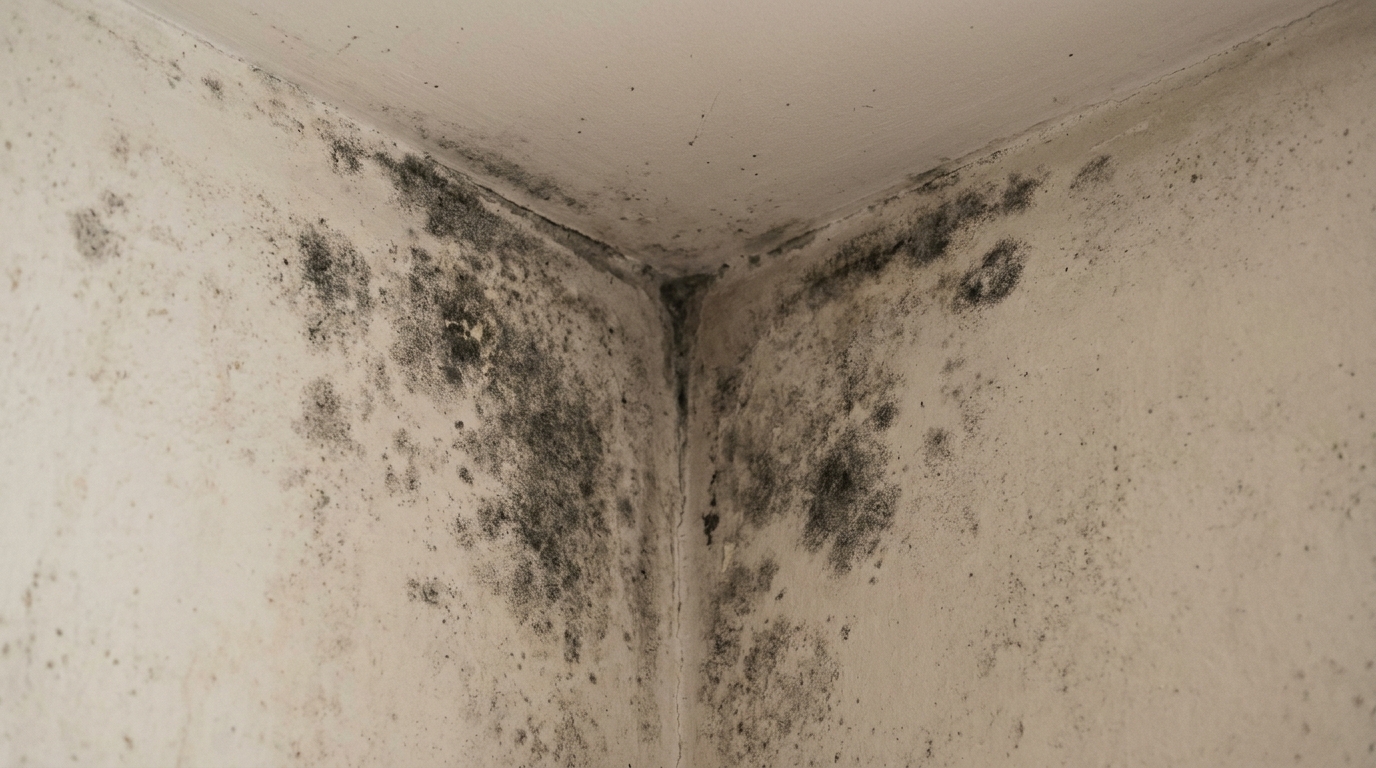
You've wiped down the windowsill. You've washed the curtains, opened the windows, and sprayed anti-mould cleaner into the corner. Two weeks later, the smell is back.
Here's the thing. Surface cleaning removes visible mould — but it does nothing to change the conditions that produced it. If your bedroom's relative humidity routinely climbs above 60–65%, mould will re-establish itself. Every single time. You're treating symptoms and leaving the cause untouched.
A few less obvious sources are worth checking. Mattresses absorb a surprising amount of moisture over months and years, particularly in rooms with restricted airflow. The underside is almost never inspected and can develop mould invisibly — right beneath where you sleep. Wardrobes pushed against external walls create a pocket of cold, still air with zero circulation, and the wall behind them is often the dampest surface in the room.
Carpets hold onto moisture far longer than hard floors. A room can smell musty for days after a bout of condensation simply because the carpet is acting as a reservoir, slowly releasing it back into the air. If there's no visible mould anywhere but the smell persists — damp smell in a bedroom with no visible mould is one of the most commonly searched variations of this problem — the carpet or mattress is usually where to look next.
How to Get Rid of the Damp Smell — Step by Step
This isn't a one-afternoon job, but it's not complicated either. Work through these in sequence.
- Ventilate first thing in the morning. Open the bedroom window for at least 20 minutes after waking — before overnight moisture has had time to settle on cold surfaces. Cross-ventilating (opening a window in another room at the same time) shifts the air far more effectively than a single open window.
- Check behind all furniture. Pull wardrobes and bed frames at least 5–10cm away from external walls. Check the wall surface behind them. Grey or black discolouration needs treating with an anti-mould spray before anything goes back.
- Sort the mattress. Strip the bed completely, stand the mattress on its side, and let it air for several hours. If there's a persistent musty smell from the underside, an enzyme-based spray breaks down the organic material mould feeds on. A waterproof mattress protector going forward slows future moisture absorption significantly.
- Stop adding moisture. Drying clothes in a bedroom — especially overnight — is one of the most common ways people unknowingly keep the humidity high. If it's unavoidable, keep the door open and run extraction. Same for wet towels: hang them in the bathroom, not over a radiator in the bedroom.
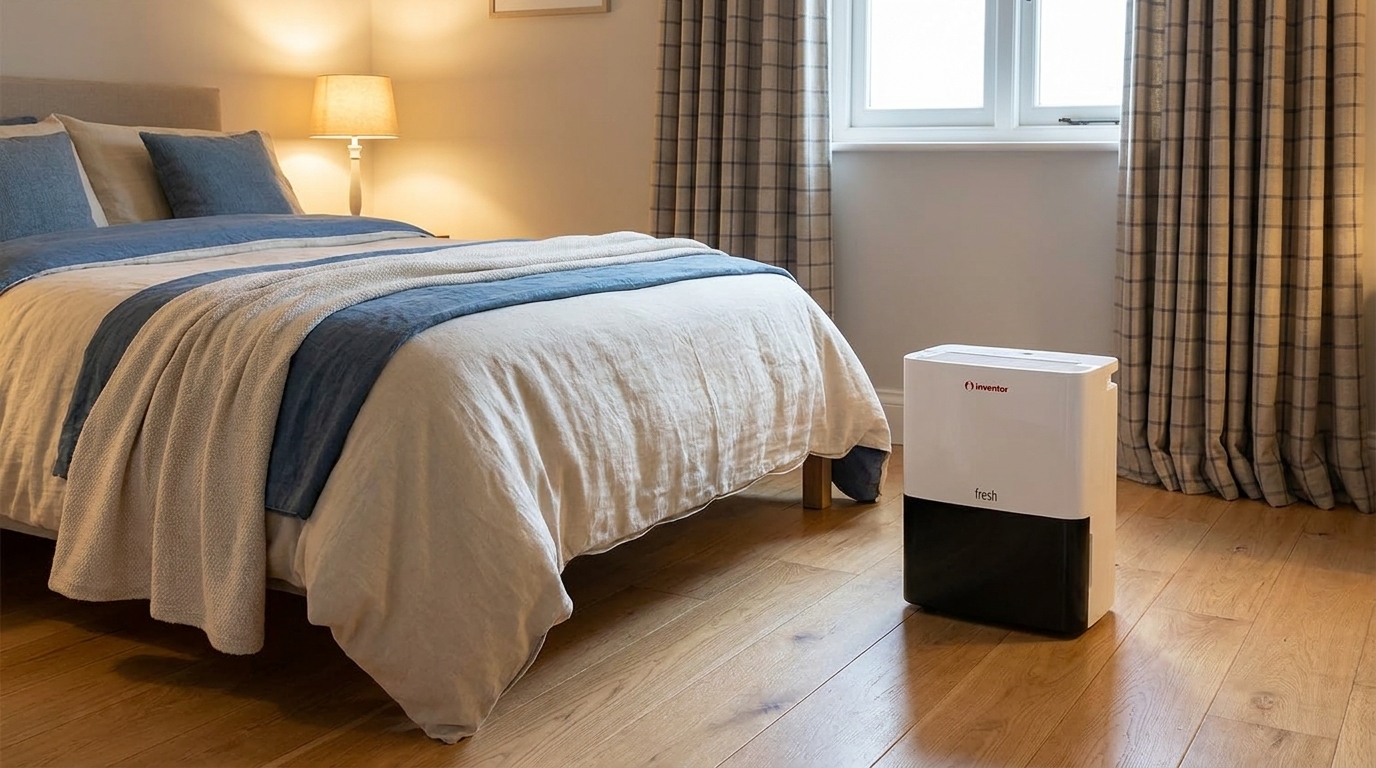
- Run a dehumidifier overnight. This is the step most people skip because it feels optional. It isn't. A machine designed for bedroom use will quietly pull excess moisture from the air while you sleep, keeping relative humidity in the 45–55% range where mould simply can't get a foothold. For smaller rooms where running costs matter, the Inventor Fresh 12L Eco R290 is worth considering — eco-friendly refrigerant, around 4p per hour to run, 4.6 stars from verified buyers.
- Monitor the humidity. A basic hygrometer costs a few pounds and removes all the guesswork. If your bedroom consistently reads above 60%, something needs to change: more ventilation, a dehumidifier, or both.
The Right Machine for Overnight Bedroom Use
Not every dehumidifier belongs in a bedroom. Some are designed for utility rooms and garages, where noise isn't a concern. Running one of those in a sleeping space will wake you up — or disrupt your sleep in ways you won't notice until you're inexplicably tired the next day.
For a bedroom, noise level is the critical spec alongside capacity. Anything above 38–40dB will be audible in a quiet room at night. Below 35dB is where most people genuinely stop noticing it. A Sleep Mode — which dims the display and locks the fan at its lowest setting — is worth having, because display glow alone can be enough to disturb lighter sleepers.
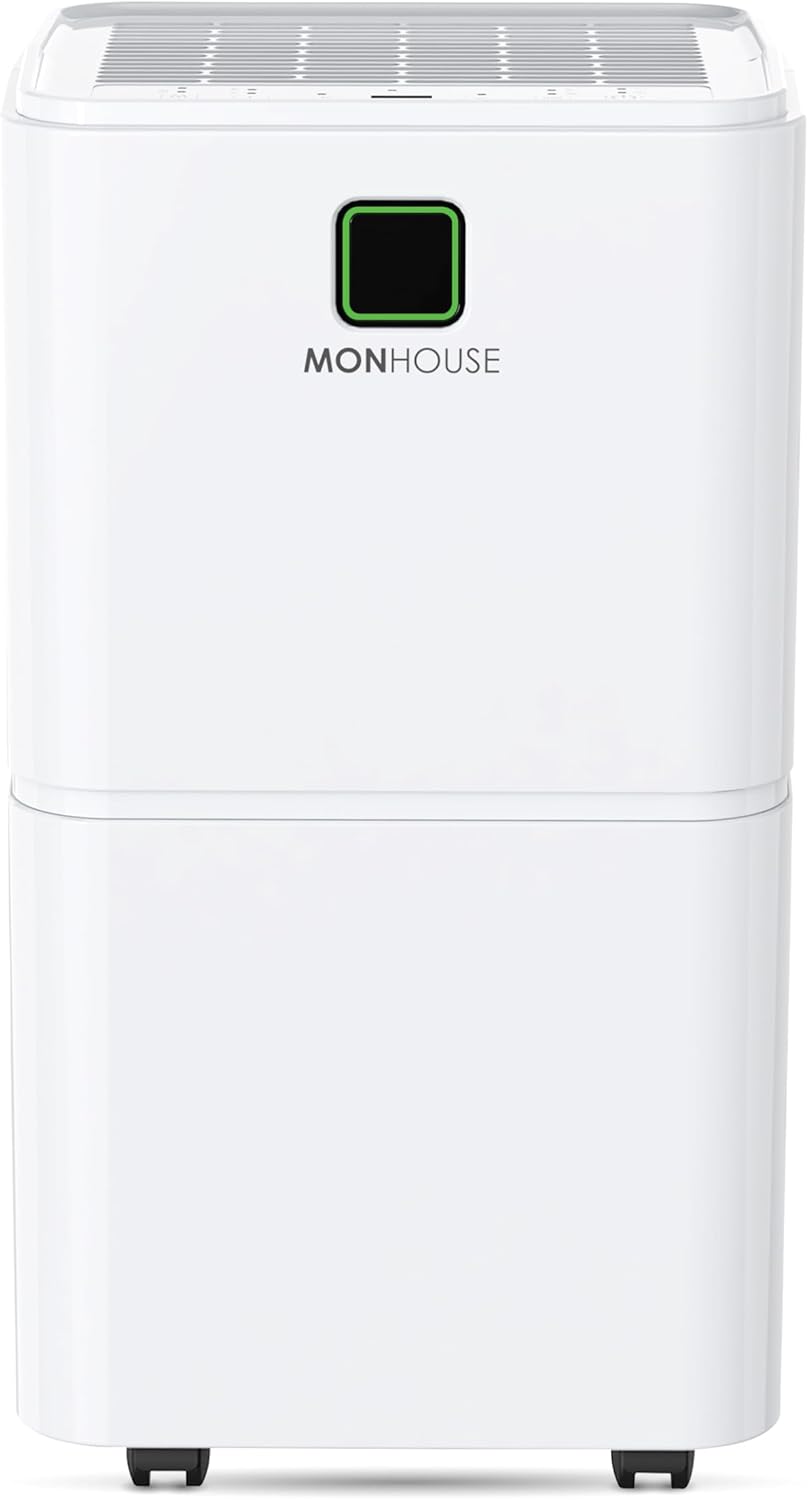
Runs at 34dB — quieter than a library. Sleep Mode dims the display to near-black and locks the fan at its softest setting. Set the 24hr timer before bed, wake up to a drier room. For a standard bedroom, 12L/day is more than enough.
View on AmazonIf your bedroom is larger than average, or you want to move the machine between rooms, the 16L/Day Quiet Dehumidifier adds extra capacity — 4.8 stars from buyers, running at roughly 6p per hour.
What to Check if the Smell Persists
You've ventilated consistently, checked behind the furniture, and run a dehumidifier for two to three weeks. The smell has reduced — but hasn't gone. At this point, it's worth looking for a hidden source.
Mould under the flooring. In older properties, the underlay beneath carpet or the joists under floorboards can develop mould that's undetectable from the surface. If the smell is most noticeable at floor level, lift a corner of carpet near an external wall and check.
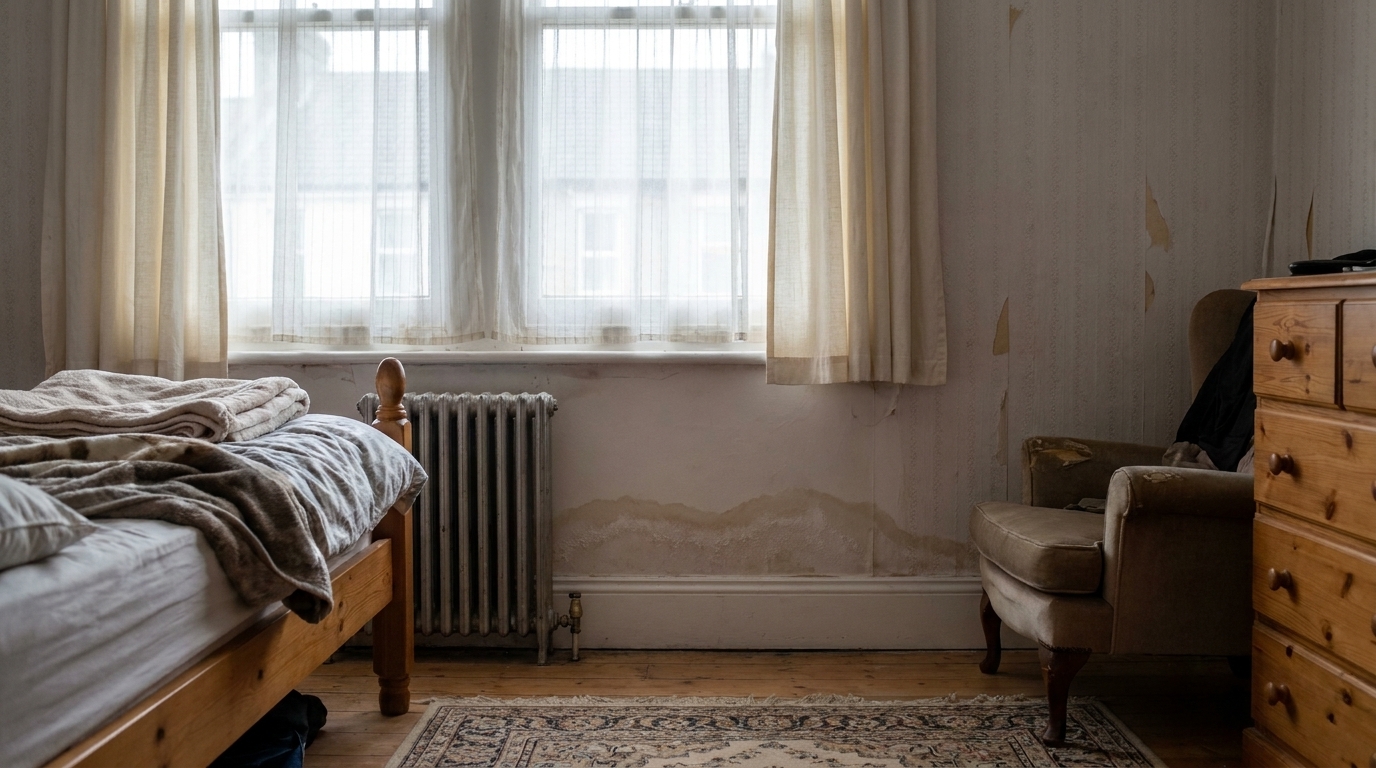
Rising damp. Less common than condensation, but real. Look for tide marks on the lower portion of external walls, bubbling or flaking plaster, or crumbling mortar near the skirting. Unlike condensation damp, rising damp affects only the bottom section of walls — typically below a metre — and tends to be worse on ground-floor rooms.
A slow plumbing leak. A pinhole leak in a radiator pipe or a poorly sealed join behind the wall can saturate plasterboard silently for months. If one wall consistently feels cooler or slightly soft to the touch compared to others, it's worth calling a plumber before assuming it's condensation.
A blocked-up fireplace. Many older bedrooms have a chimney breast with a sealed fireplace. Without ventilation, condensation forms inside the chimney void and seeps through into the room. A small vent grille installed in the chimney breast usually resolves this quickly and cheaply.
For more on dealing with visible mould growth once you've found it, see our guide on how to stop mould in the bedroom. If condensation on your windows is also part of the picture, the condensation on windows guide covers that in detail — the two problems often share the same root cause.
The Short Version
A bedroom that smells damp is almost always caused by overnight moisture from breathing, sweating, and condensation — not structural problems. The musty odour comes from mould or bacteria feeding on that excess humidity. Cleaning removes mould from surfaces but doesn't change the conditions — the smell will return until you reduce indoor moisture.
Open windows every morning, check behind furniture, and run a dehumidifier overnight. For bedroom use, look for a machine rated 34dB or below with Sleep Mode — the MONHOUSE 12L is a solid choice at around 5p per hour. If the smell persists after several weeks, check under flooring, look for rising damp signs near the skirting, or consider a slow plumbing leak behind the wall.
See our full Top 10 dehumidifier guide for a complete comparison, or browse more damp advice at Guides & Advice.